
What is STA? Short term accommodation, explained for carers.
Short term accommodation (STA) explained for family carers: what a stay covers, the 14 and 28 day limits, planned and emergency stays, and how to book one.
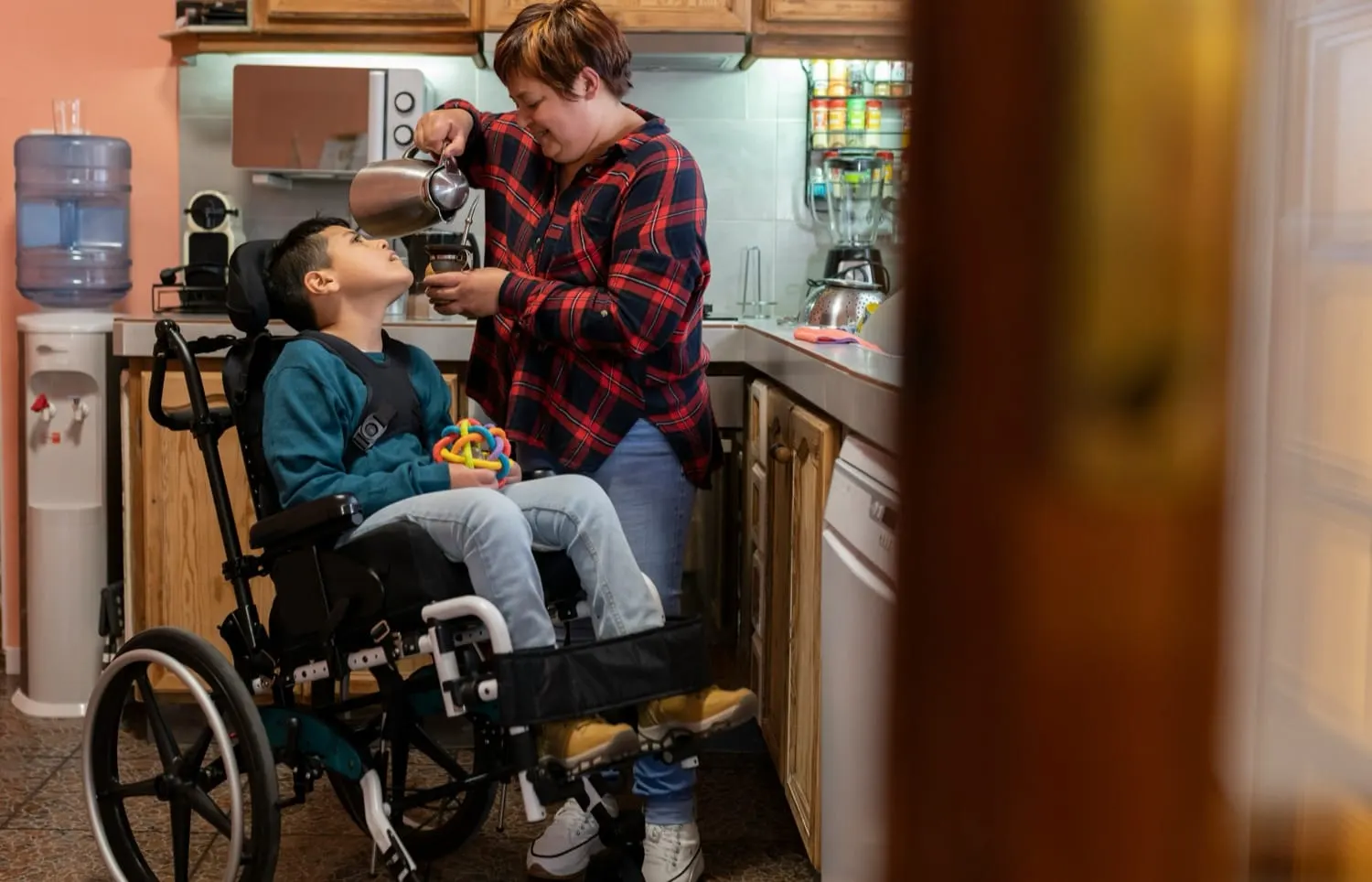
If you care for a family member with disability, short term accommodation is the NDIS support most likely to give you a real break. It is also the one with the most confusing names, limits and recent changes. This article is written for carers: what a stay actually covers, how many days the NDIS funds, what changed in October 2025 and again in July 2026, and how to book one that goes well.
Short term accommodation, usually shortened to STA, is NDIS funding for a participant to stay somewhere other than their usual home for a short period, with support included. For most families the point is respite: you rest, travel or deal with your own health while your family member is somewhere safe with people who know how to support them.
What a stay covers
STA is unusual among NDIS supports because it bundles several things into one stay. The NDIA’s guideline describes it as covering:
- Accommodation. A bed in a real home or other standard accommodation, with linen and the ordinary things of daily life.
- Support. Personal care, meals, medication and the daily help your family member usually gets from you, delivered by support workers briefed on their routine.
- Food. Meals and snacks for the length of the stay.
- Activities. Outings and things to do, planned around what the person enjoys rather than a fixed program.
What it does not cover is anything that looks like a holiday: resort accommodation, cruises, overseas travel or tickets to events. The NDIA’s updated guideline, released on 20 October 2025, says so directly, and asks that accommodation be ordinary and within your state unless you live in a border town. It also makes the purpose explicit. STA is for participants who live with, or receive daily drop-in support from, family or friends who provide at least six hours of disability-related support a day. For children under 18 it is limited to exceptional circumstances, such as a risk of the child entering out-of-home care or another household member with disability. People who already have Supported Independent Living or an Individualised Living Option are unlikely to receive separate STA funding, because their support is already paid for. At Newdawn STA happens in a room in one of our homes when one is free, or in accommodation we arrange for the stay with our own team alongside. Our STA and respite page explains how that works day to day.
How many days the NDIS funds
The guideline funds STA for up to 14 days at a time and usually up to 28 days a year. Those 28 days can be used in one block, as several shorter stays, or as a regular weekend each month, which is the pattern many carers find most useful because it gives you something to plan around.
More than 28 days is possible only in exceptional circumstances, for example a carer’s own hospital admission, and you need to ask the NDIA with evidence. If a stay is likely to run longer than a fortnight because a home is not ready, the NDIA will usually look at other supports instead. For a gap of weeks or months while a confirmed home is made ready, medium term accommodation is the better fit.
Planned versus emergency stays
A planned stay is booked weeks ahead for a known reason: a wedding interstate, your own surgery, a child’s school camp, or simply a scheduled rest. Planned stays are easier to match to a suitable room and team, and they tend to go better for the participant because there is time to visit beforehand and settle the routine.
An emergency stay is what happens when a carer is suddenly unwell, a family arrangement breaks down or something at home makes staying unsafe tonight. The NDIS funds both from the same budget. The difference is practical: for an emergency, a provider either has a bed that night or it does not, and a good one tells you straight away which. If your family member’s plan funds STA, it is worth having a conversation with a provider before you ever need an emergency stay, so the support profile is already on file and the first call is shorter.
What changed on 1 July 2026
For years STA was claimed as one bundled daily rate that covered everything. From 1 July 2026 the NDIS Pricing Arrangements separate a stay into parts, and your quote and invoice now show each one:
- Participant accommodation, with a national price limit of $162.85 a day, which covers the room, meals and utilities.
- Support worker accommodation, where a worker needs to stay overnight away from their own home to support your family member.
- Support hours, claimed at the usual hourly rates for the time of day, the day of the week and the intensity of support, including sleepover or active overnight support.
In practice this means a stay with one-to-one support all day uses more of the plan than a shared stay with group support, and a stay with an awake overnight worker costs more than one with a sleepover. None of this changes what your family member receives. It does change how clearly you can see where the money goes, which is a good thing. Ask any provider for a quote that shows the three parts before you book; if they cannot, be cautious.
STA still sits in the Core budget, under Assistance with Daily Life. Our funding guide explains how Core works and how a plan manager pays the invoice.
How to book a stay
Four steps, in the order they usually happen.
Check the plan. Look for short term accommodation or respite in the Core budget, or ask your support coordinator or plan manager whether the Core budget can be used for it. Work out roughly how many days you want to use this year and when.
Call with the dates and the reason. Tell the provider the dates, where your family member lives, their support needs and why the stay is happening. A provider should tell you quickly whether they have a room, and should be honest if they do not.
Build the support profile. This is the part that makes or breaks a stay. Routine, communication, medication and dosage times, diet, allergies, mobility and equipment, behaviour support plan if there is one, what calms them, what upsets them, what they like doing. Write it down even if you have told the provider verbally.
Agree the quote and the handover. A written quote showing accommodation and support hours against the plan, a short service agreement, and a plan for the first morning: who meets your family member, where their things go, when you can call. Ask for a written summary at the end of the stay for you and the coordinator.
What to pack
- Medication in its original packaging, with the dosage list and the prescriber’s details.
- Any aids and equipment they use: wheelchair, walker, hoist sling, communication device, chargers.
- Clothes for the weather and one more day than the stay, plus pyjamas and toiletries.
- Continence products and any specialised dietary items.
- Familiar things: a pillow, a blanket, photos, a favourite mug, music. A room feels less strange with something from home in it.
- A one-page summary of the support profile, even if the provider already has it.
- Medicare card, NDIS number and your contact details for the whole stay.
What to ask a provider
Before you book, ask these questions and listen to how directly they are answered.
- Where exactly will my family member stay, and who else will be there?
- Who will be on shift, and have they supported someone with similar needs before?
- Will there be someone awake overnight, or a sleepover worker?
- How will the quote split accommodation and support hours, and what will the stay cost against the plan?
- What happens if my family member becomes unwell or distressed during the stay?
- How often can I call, and will you call me?
- What happens if you cannot provide the room on the agreed dates?
A provider who answers all of those plainly is one you can trust with a weekend. If you would like to talk through a stay in Melbourne’s south-east or Gippsland, call 03 5998 0717 at any hour, or see our Supported Independent Living page if a trial stay is the first step towards a longer-term home.
Questions people ask about this
Is STA the same as respite?
In NDIS terms, yes. Short term accommodation is the funded support, and respite is the reason most families use it: a break for the carer while the participant stays somewhere else with support. In October 2025 the NDIA briefly renamed it short term respite to make that purpose clearer, then changed the name back to short term accommodation in the 2026-27 Pricing Arrangements after community feedback. You may see both names. They refer to the same support.
Can STA be used for a holiday?
No. The NDIA's current guideline is clear that STA is not a holiday fund and does not cover cruises, overseas travel or trips whose main purpose is leisure. It funds standard accommodation and disability support during a stay away from home, within your state unless you live in a border town. A stay can still be enjoyable, with outings and activities, but the accommodation must be ordinary and the reason must be the support, not the destination.
How much notice do you need for a stay?
For a planned stay, a few weeks lets us match the dates to a free room and brief the team on your family member's routine, medication and preferences. For an emergency, call 03 5998 0717 at any hour. We tell you within the hour what we can do, and if we have no room we say so and point you to who might. We do not keep a bank of empty beds, so the earlier a planned stay is booked, the more choice there is.
Will my family member have the same workers each time?
As far as rostering allows, yes. The workers who staff our STA stays are the same people who work in our Supported Independent Living homes, and for a repeat stay we try to roster at least one worker who has supported your family member before. Before any stay we gather a support profile covering routine, communication, medication, diet, behaviour support and what they enjoy, so a new worker starts the shift already knowing them.
Ask the team that does this every day.
Newdawn is a registered NDIS provider based in Cranbourne, supporting people across Melbourne's south-east, Queensland and WA. Call, refer online, or ask a question: a real person replies.
More from the blog.

How to change your support coordinator in Melbourne, without losing a day of support.
Step by step: check the notice period in your service agreement, tell the NDIA or your LAC, request your plan and records, and hand over open tasks with no gap.

Forensic disability support: what it is, who it is for, and what good looks like.
Forensic disability support in plain English: who it is for, how Victoria's orders and agencies fit together, how the NDIS shares the cost, and what to ask.
From Casey Hospital to home: how NDIS discharge support works.
From a Casey Hospital social worker's first call to the first night home: NDIA discharge commitments, STA, MTA and SIL options, who pays, and the timeline.